

#retirementransition

RETIREMENT IDENTITY REFLECTION ASSESSMENT

This reflection is a quick check in to help you explore how you are thinking about retirement beyond finances. It is not a test. It is a pause point to support clarity and intention as you move toward your next chapter.

HOW TO USE

Rate each statement from 1 to 5: 1 is not clear or not intentional and 5 is very clear and very intentional

Answer quickly. Trust your first response.

QUICK REFLECTION CHECK IN

I feel clear about who I am beyond my work role.

I feel a strong sense of meaning and purpose in my life today.

I feel clear about the values that guide my decisions.

I feel confident about the kind of lifestyle I want in retirement.

I am aware that retirement involves an identity shift, not only a financial shift.

I am thinking about what I am moving toward, not just what I am leaving.

I feel open to exploring uncertainty about my next chapter.

I am intentionally thinking about how I want to spend my time in retirement.

I feel confident I can design a meaningful next chapter.

REFLECTION PAUSE

Take a moment to notice your responses:

What stands out most?

Where do you feel strongest today?

Where do you feel least clear?

What is one area calling for your attention?


MOVING FORWARD

Clarity creates direction. You do not need all the answers today, you only need awareness of where you are starting from.

As you reflect on your responses consider what it would look like to design your next chapter with intention rather than assumption.

This is where your retirement transition becomes a conscious design and not a default experience.

More information can be found at https://www.powerupyourretirement.com/
Beyond Financial Readiness: A Reflection on Retirement as a Life Transition

When conversations about retirement come up, they often begin with finances and rightly so.

Financial readiness is a critical foundation.

But over time, a different layer of readiness begins to matter just as much.

I often refer to this as the shift from accumulation to activation not just preparing to retire, but preparing to live it fully.

And that shift raises a different kind of question: Not “Can I retire?” But “How do I want to live when I do?”

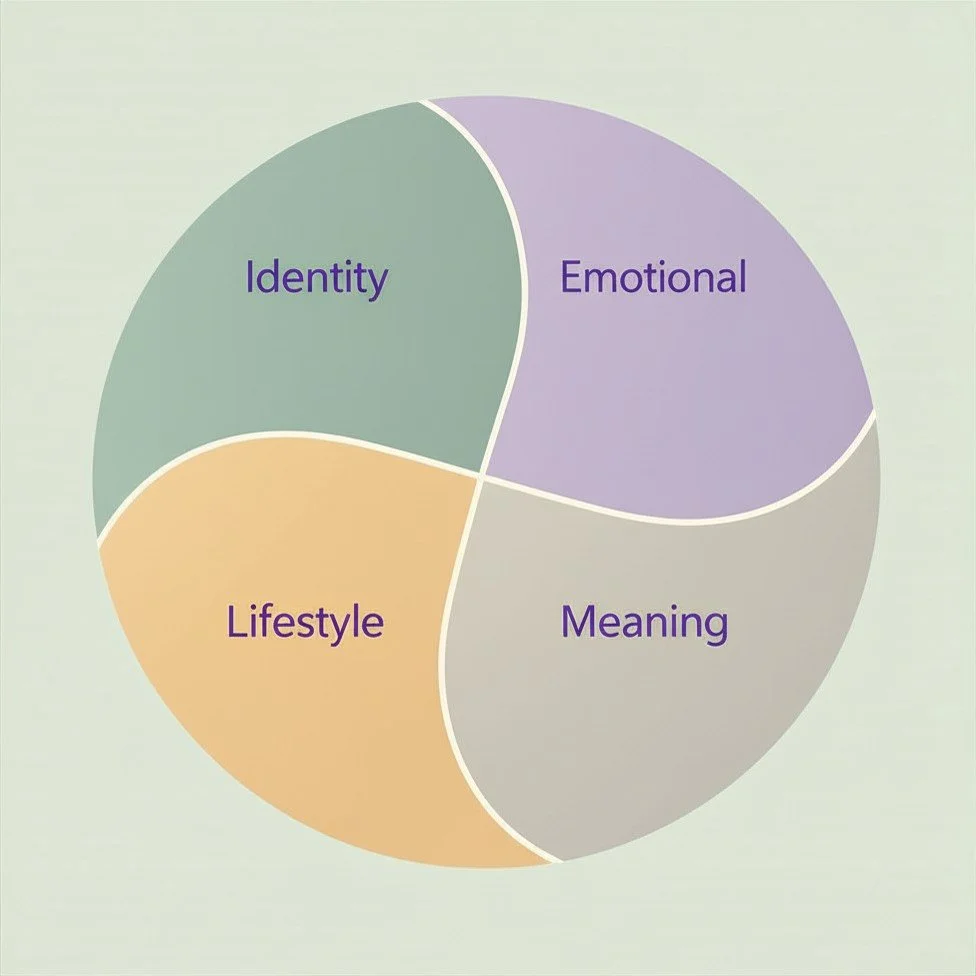
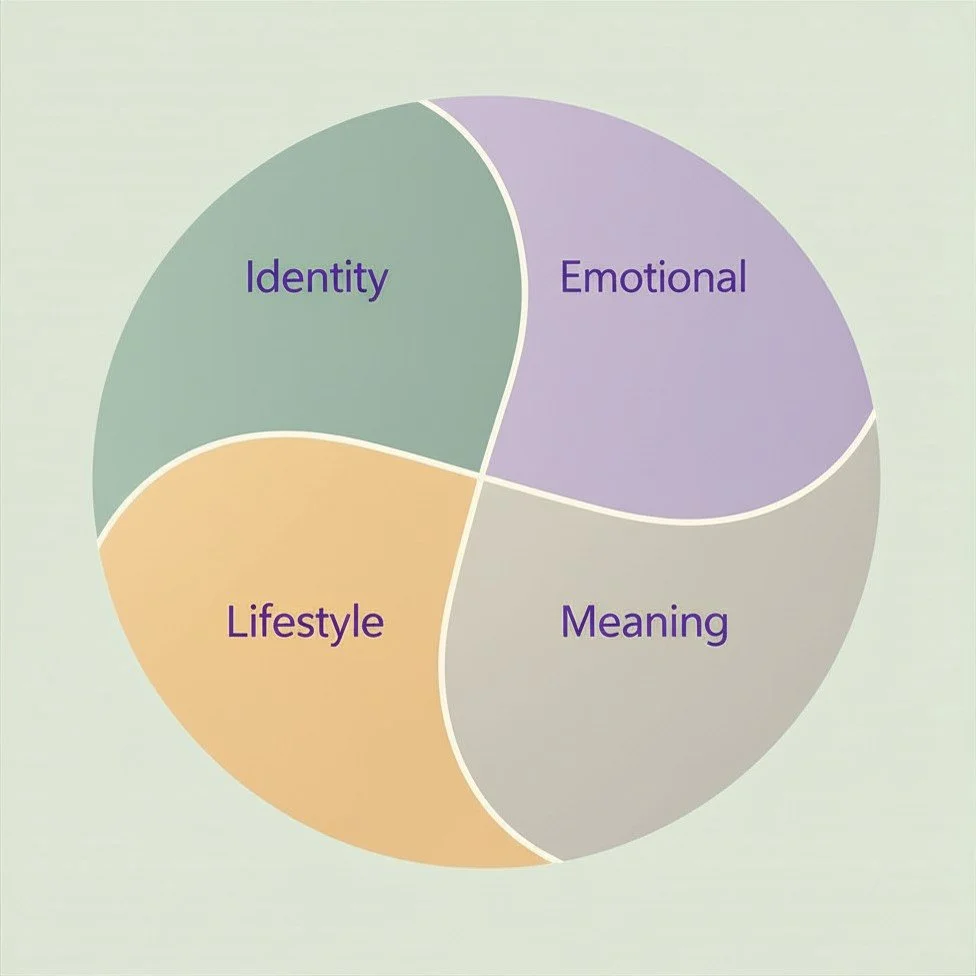
To explore that more deeply, I created a simple reflection tool that looks at retirement readiness through multiple dimensions not just financial, but also:

- identity readiness
- emotional readiness
- lifestyle readiness
- meaning readiness

It’s not a checklist or assessment.

It’s an invitation to pause and reflect on what this next chapter of life could look like with more intention.

I‘ve shared it in earlier blog for anyone who wants to take a closer look.

I’d be curious what part of retirement feels least explored in your own thinking right now?

The PowerUp Retirement Readiness Model From Accumulation to Activation

Retirement is often framed primarily as a financial milestone. While financial readiness is essential, it is only one part of a much larger transition. Retirement is also a shift in identity, emotional experience, lifestyle, and meaning. Many individuals are financially prepared, yet find themselves underprepared for the lived experience of this next chapter. This reflection tool is designed to support a more holistic view of retirement readiness and help you consider what you are moving toward, not just what you are stepping away from.

A Shift to Consider

Financial readiness answers the questions: Can I retire?

This model invites another question: How do I want to live my life in retirement?

Retirement is a transition in identity, emotional experience, lifestyle, and meaning, not just income.

Four Dimensions of Retirement Readiness

Identity: Who am I beyond my professional role?

Emotional: How do I feel about this transition?

Lifestyle: How will I structure my time and energy?

Meaning: What gives my days purpose and direction?

Reflection Questions – Use the questions below to reflect on your next chapter.

1.      What am I truly saving for in this next chapter of life?

2.      Who am I beyond my professional role?

3.      How do I want my days to feel in retirement?

4.      What gives my life meaning outside of work?

5.      What parts of my identity am I ready to release or reshape?

6.      What will give structure and rhythm to my days?

7.      What does living well in retirement mean to me personally?

Retirement is not only a transition away from work. It is a transition into a different way of living. So, what are you transitioning to?

From Saving to Living: The Shift from Accumulation to Activation in Retirement

We often think about retirement as a financial milestone we prepare for over decades.

And financial readiness is essential as it creates the foundation for security and choice.

But increasingly, I’ve been exploring a deeper layer of the conversation:
What does it mean to move from accumulation to activation in retirement?

Not just preparing to retire but preparing to live it fully.

In my latest article, I explore this shift from saving to spending not only financially, but emotionally, psychologically, and experientially.

It touches on the idea that retirement is not simply an ending point in a career journey, but a transition into a different way of living where identity, rhythm, and meaning all come into focus.

In this view, retirement becomes less about stepping away from something and more about stepping into something more intentional.

You can read the full article here:

I’m curious, how are you thinking about retirement readiness beyond finances?

The Retirement Shift Most People Don’t Expect

Retirement is often described as a financial milestone. But in reality, it’s a transition of identity.

A shift from:
- earning to spending
- structure to self-directed time and
- achievement to meaning-making

Financial readiness answers one questions: ‘Can I retire?” But it doesn’t answer the deeper one: “Who am I when I am no longer defined by work?”

This is where many people discover retirement is not an ending but a redesign of identity, rhythm, and meaning.

And that redesign is often the part not everyone prepares for.

From Accumulation to Activation: Rethinking Retirement Readiness

We’ve spent decades asking an important question about retirement: “How much do I need to save?”

And rightly so as financial readiness is a critical foundation for retirement planning.

But there is another question that often emerges later in the conversation: “What am I saving for and how do I want to live this next chapter?”

For many people, retirement is being financially prepared but the change in lifestyle is less often explored.

And that gap often becomes visible when the structure of work disappears and life suddenly feels less defined.

I’ve been reflecting on what it means to move from accumulation to activation, not just preparing for retirement but preparing to live it fully.

More on this in the next post.

From Saving to Spending: Powering Up the Next Phase of Retirement

From saving to spending. For many people entering retirement, this shift is harder than expected, not financially, but psychologically.

Because for decades, saving isn’t just something you do. It becomes part of who you are: responsible, disciplined and future-focused.

So when the moment comes to start using what you’ve built, something unexpected can show up: guilt.

The feeling that spending is somehow “undoing” all the good work.

But this is not a financial problem, it's an identity transition.

Retirement asks something subtle but profound. Not just “Are you ready to retire?” but “Are you ready to live differently?”

One helpful reframe is this:

You are not spending down but rather you are activating a life you have already built.

Nothing is being lost. Your life is being lived.

This is where retirement becomes more than a milestone, it becomes a mindset shift.

This is the essence of Powering Up Your Retirement Lifestyle: shifting from preparation to activation, presence, and meaning.

Design Your Next Chapter: A Gentle Transition to Retirement Through Gig Work

Are you familiar with the term ‘gig economy’ and how it’s shaping the way people transition into retirement?

The gig economy refers to short-term contracts, freelancing, or “side-hustles” that differ from the traditional 9-to-5, long-term job. Many companies today prefer to hire freelancers or contract workers instead of full-time permanent employees. And with the rise of digital platforms like Upwork, Fiverr, and TaskRabbit, finding gig work online has never been easier.

You might think gig work is mostly for younger workers, but both millennials and baby boomers are actively participating in this flexible, independent workforce!

Why is this important for those approaching retirement? Because gig work offers the freedom and flexibility to decide how much and when you want to work. For someone nearing retirement who wants to stay engaged, contribute to society, or explore new passions, gig work provides a gentle, adaptable transition.

Some people approach retirement with less saved than they hoped. Gig work not only offers meaningful engagement but can also supplement income during this phase.

What about you? Could retirement be the chance to explore flexible work you’re passionate about? Maybe you’d like to ‘give back’ by supporting non-profits or community initiatives on your own terms.

Examples of gig economy jobs include:

  • Delivery or ridesharing

  • Rental hosting (think Airbnb)

  • Temporary labor or house-sitting

  • Skilled freelance roles like writing, graphic or web design, consulting

  • Tutoring or teaching online

  • Pet sitting or dog walking

  • Event planning or assisting

  • Virtual assistant or administrative support

  • Photography or videography gigs

  • Handmade craft sales on platforms like Etsy

This type of work often offers short-term assignments, remote options, and schedule flexibility—ideal for crafting a retirement rhythm that suits you.

It’s also important to recognize some challenges: gig work may lack traditional benefits or income stability, so planning accordingly is wise. Still, the flexibility and autonomy it offers can make the transition rewarding both financially and emotionally.

What kind of retirement transition do you hope for? Would you continue in your current field, or is this a chance to try something new? Either way, your dreams are possible.

Keep an open mind, think creatively, and follow what excites you. You never know how your passions and the world’s needs might weave together in unexpected, fulfilling ways!

Retirement is a new beginning. If you’re considering gig work as part of your next chapter, I’d be glad to help you explore the path forward.

Member Login
Welcome, (First Name)!

Forgot? Show
Log In
Enter Member Area
My Profile Not a member? Sign up. Log Out